Higor Jesus de Lima, SJ, is a Brazilian Jesuit scholastic studying theology at Regis St. Michael’s Faculty of Theology at the University of Toronto. He earned a Licentiate Degree in Philosophy from the Jesuit Faculty of Philosophy and Theology (FAJE) in Brazil and has been involved in youth, educational, and vocational ministries.
What book has influenced your spiritual journey the most, and why?
The book that has influenced me most spiritually is God and You: Prayer as a Personal Relationship by the American Jesuit William A. Barry. When I was getting to know Ignatian spirituality and discerning my vocation, it was essential to understand that prayer is a personal relationship with God. Whenever I addressed God, I tried to use formal language, as if I were speaking to a stranger and as if this relationship demanded an elaborate way of speaking. I only realized this when I read Barry’s book. After that, my relationship with God changed completely: first because of the language, and then because I understood that God wanted to relate to me in every moment of my life, including those in which I didn’t think he was present, such as the moments when I was angry or disappointed.
What is your favourite movie and why?
My favourite movie is the Brazilian film O Auto da Compadecida (literally “The Compassionate Woman’s Play,” the woman being the Virgin Mary). In English, the title is A Dog’s Will, which has to do with the plot, but I prefer the Brazilian title. The film portrays life in a village in northeastern Brazil. The story shows the lives of poor people in the sertão (the backlands), facing drought, hunger and local politics. The plot is very good, but what moves me every time I watch it is one of the final scenes, which portrays devotion to Mary, the mother of Jesus, in a very beautiful way.
What’s a surprising hobby or talent you have that others might not expect?
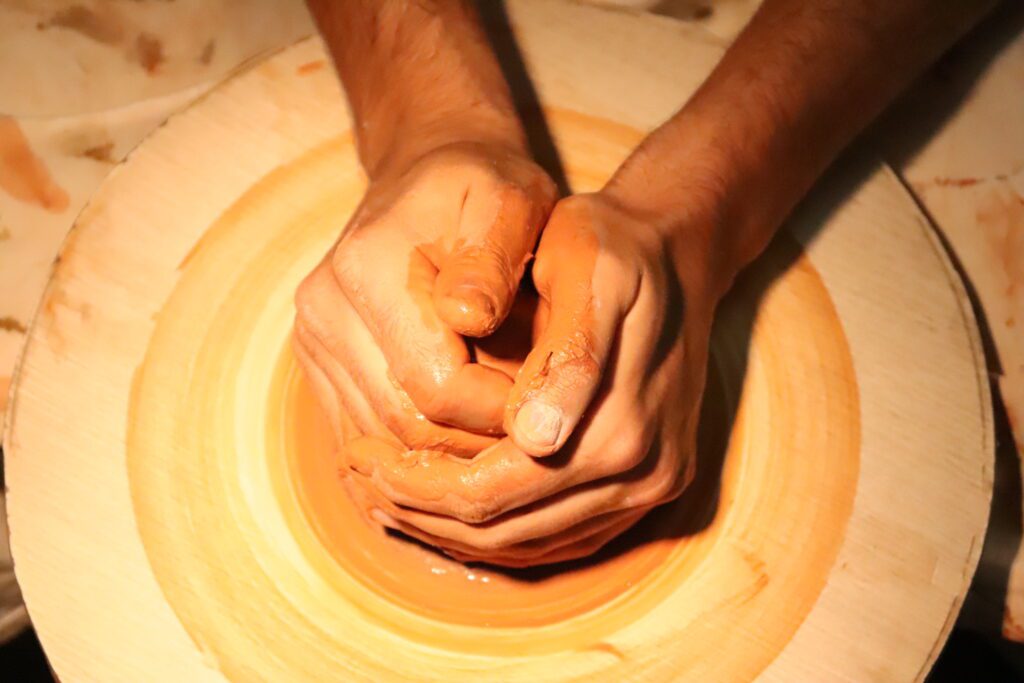 In my life as a Jesuit, I have had the opportunity to learn many things beyond what is proper to our way of life. Of all the things I’ve learned, the ones I enjoy most as hobbies are cooking and pottery. In my day-to-day life, I like to cook for myself and for my friends, especially making pasta from scratch. Pottery, on the other hand, is one of the fruits of the pandemic. Since social activities weren’t possible, I used my time to learn how to work with clay. I enjoyed it so much that I enrolled in a school and had the grace of meeting great ceramicists who taught me much of what I know today.
What’s the most inspiring place you’ve prayed, and why did it stand out?
One of the most important places for my spiritual life is the National Shrine of Anchieta. Anchieta is a Jesuit saint who went to Brazil in the 16th century. He became known for writing the first grammar of Tupi-Guarani (the main linguistic family of Brazil’s Indigenous peoples), but also for being a polymath: poet, founder and organizer of cities, playwright, and more. He died in my hometown, which is named in his honour. Throughout my life, I have witnessed many pilgrims walking the Steps of Anchieta, a 100 km pilgrimage that ends at the Shrine of Anchieta, and as an adult, I was able to make the pilgrimage myself three times.
What part of Jesuit life has brought you the most unexpected joy?
It’s hard to think of just one moment of my Jesuit life that has brought me joy. Philosophy was certainly a very special time in my life, not only because I went deeper into the thought of humanity, but also because of the friendships I built during that stage. Regency was also a very special time. Going to an apostolic community after seven years living in formation houses helped me develop my identity as a Jesuit. During my two and a half years of Regency, I worked with high school students at a Jesuit school that, in fact, honours Saint José de Anchieta in its name. It was very good to see how the Lord calls me to serve Him in many different ways, not only inside a church speaking about the Gospel, but by living the Gospel in other places, including with those who do not believe in His Word.
If you could share one piece of advice with someone discerning their vocation, what would it be?
If I had to give one piece of advice to someone who is thinking about becoming a Jesuit or who is already discerning, I would say, first, don’t be afraid of new experiences, because God often shows us His will in the most unexpected places; locking yourself at home and waiting for an answer to fall from the sky doesn’t work most of the time. Second, I would say there’s no need to rush. If your heart is anxious because you need to finish your studies quickly to become a Jesuit, or if some family or work commitment is keeping you from taking this step now, offer your situation to God and trust. Third, I would say listen to the voice of God that speaks in your prayer, but also through reality and the people around you.
What was your biggest fear before entering the Jesuits, and how did you overcome it?
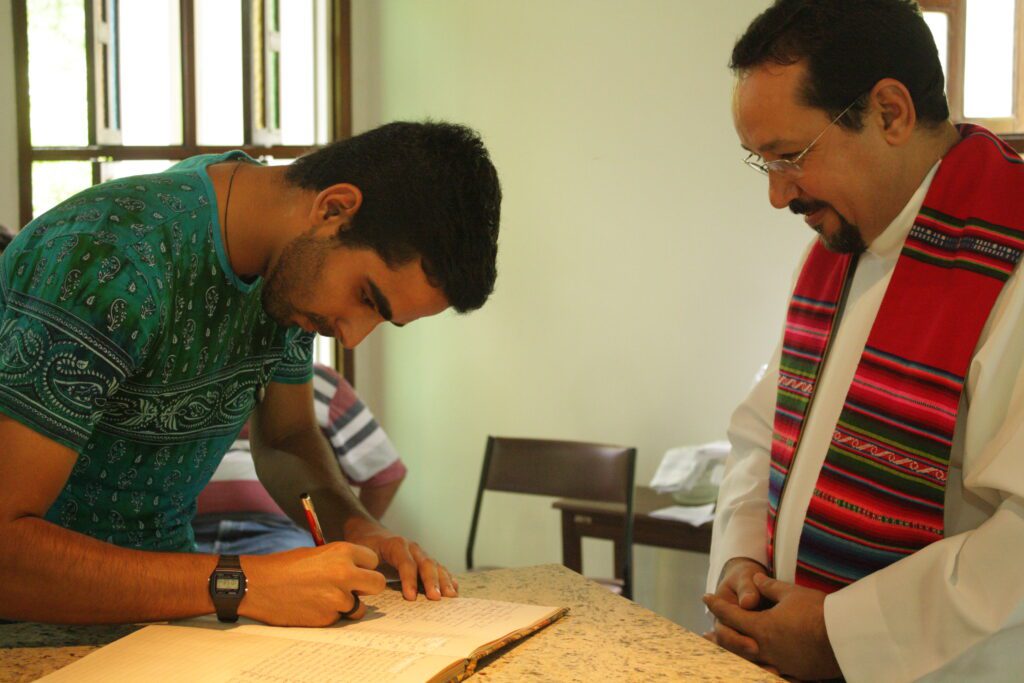 My biggest fear before entering the Society of Jesus was being far from my family, since the Society of Jesus is a universal order. To this day, I think this is one of the hardest parts of being a Jesuit. On the other hand, I have met so many people and so many places that I feel my family has grown. This is true not only for me, but also for my family, who has welcomed many of my friends as visitors and guests over the last 12 years.
Which Jesuit value resonates most with you in today’s world?
Since its beginning, the Society of Jesus has been a religious order of the frontiers. This is because it learned to discern reality and respond to its needs. Detachment, the fruit of prayer and discernment, is a value that enables us to be in any place and in any situation. It is beautiful to see in the Society of Jesus’s annual report how we are present in so many places around the world, doing completely different things. For me, this is a fruit of the Spirit.
What’s your go-to prayer or spiritual practice when you’re feeling stuck?
When I feel stuck or am facing some difficulty, praying the rosary helps me clear my head and give my worries their proper weight. I believe the rosary gives us some distance from reality, through the contemplation of the mysteries of Christ’s life and the repetition of the prayers. Sometimes I stop for 15 minutes to pray the rosary, and it helps me see more clearly what I’m living through and what I should do.
How has community life as a Jesuit shaped your understanding of friendship?
When I first got to know the Society of Jesus, one of the things that caught my attention was the way Jesuits related to one another. Regardless of age, origin or the positions they hold, Jesuits treat each other as brothers. Beyond that, within the Society of Jesus I found some of my best friends. After living with friends for a few years, I learned that friendship is much more than getting together once in a while to celebrate life. A true friendship bears with and bears up.
If you could have coffee with any Jesuit saint, who would it be, and what would you ask them?
If I could have coffee with a Jesuit saint, I would choose one who is not yet a saint: Venerable Matteo Ricci. My first question to him would be about what a Christian needs to know when encountering a culture completely different from their own. Ricci’s achievements in China in the 16th century are impressive, and the effects of his mission are still felt today.
How has being in Canada helped you to better appreciate the universal nature of the Society of Jesus?
Although I had lived in an international community before, I had never been in the position of a migrant. I think the culture of Canada and that of the Jesuit province here helped me feel at home very quickly. Community life with other international Jesuits gives us many opportunities to share our own cultures and learn about those of our companions. Despite the cultural differences, there is a certain familiarity that I consider to be the fruit of the heritage each of us received when entering the Society of Jesus.
What is the most surprising thing about Canada for you?
The in-between seasons in Canada are beautiful. Both fall and spring are very special seasons for being in nature, going on hikes and appreciating creation.
How are you/have you been adapting to Canadian winter?
The first week of winter was very beautiful, but after that I have to confess that it was a difficult process of adaptation. I come from a city in Brazil where, in a harsh winter, the temperature gets down to 13 degrees Celsius, so I had to learn to deal with the cold and the sub-zero temperatures in Canada.